Why Tinnitus Gets Worse — And What's Actually Causing the Constant Ringing in Your Ears
⚠️ If the ringing has been getting louder — don't wait. Watch the free presentation now →
Tinnitus Research | Updated April 2026 | 14 min read | 50+ million Americans affected

If the Ringing in Your Ears Is Ruining Your Life — You're Not Imagining It, and You're Not Alone

50 million Americans live with constant tinnitus. Most have been told "learn to live with it." A growing body of neuroscience research says that answer is wrong — and there's a specific reason why the ringing keeps getting louder.

Neurology Health Review

Neurology & Hearing Health Review

Independent Research & Patient Reporting | Updated April 20, 2026

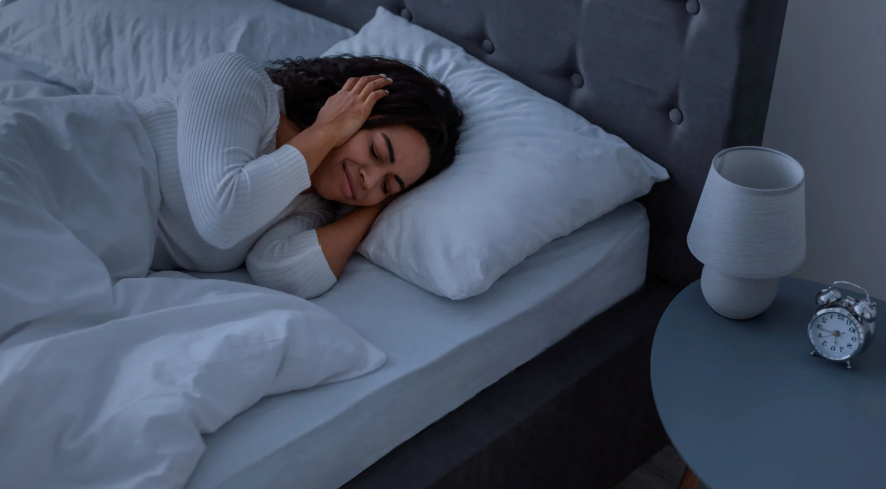
Person suffering from constant tinnitus ringing in ears unable to sleep or concentrate

"I described it as having a fire alarm going off inside my head 24 hours a day, and no one could hear it but me." — Maria T., 54, tinnitus for 9 years

There's a specific kind of exhaustion that only tinnitus sufferers understand. It's not just being tired. It's the bone-deep, relentless fatigue of spending every waking hour — and most sleeping hours — fighting a sound that no one around you can hear. A sound that doesn't take breaks. Doesn't respond to medication. Doesn't care that you have work in the morning, or that your partner needs you, or that you used to love silence.

If you've typed any version of "how to stop the ringing in my ears" into a search engine at 2am, this page is for you. If you've sat in an audiologist's office and been told your hearing tests are "normal" while the ringing screams in your head — this page is for you. If you've been told to "learn to live with it" and wondered if the person saying that had any idea what they were talking about — this page is for you.

What you're about to read is not another list of lifestyle tips. It is the current state of neuroscience research on what tinnitus actually is, why conventional treatment consistently fails, why the ringing tends to get worse over time — and what is now known about addressing the actual root cause. There is a free presentation that covers all of this in detail. You'll find it at the end of this page.

Skip Ahead: Watch the Free Presentation Now

Free. No registration required.


"Why Can't I Just Get Used to This?" — The Question Every Tinnitus Sufferer Asks

One of the cruellest aspects of chronic tinnitus is that it is completely invisible. You cannot show it on a blood test. A standard hearing test often comes back normal. Brain scans frequently show nothing unusual. To the outside world, including most doctors, you look completely fine. And yet inside your head, there is a relentless, high-pitched scream that never stops.

This invisibility creates a particular kind of psychological torture. People question you. "Are you sure it's really that bad?" Partners grow frustrated. Doctors recommend therapy for anxiety. You begin to question your own sanity. You wonder if other tinnitus sufferers have it as bad as you do, or if something uniquely wrong is happening in your head.

"I spent two years thinking I was losing my mind. Every doctor told me my tests were normal. Meanwhile I couldn't hold a conversation, couldn't sleep, couldn't think. I felt completely alone in a condition only I could experience."

— Robert K., 58 | Software Engineer, Seattle WA | Tinnitus: 7 years

You are not losing your mind. You are experiencing a real, measurable neurological phenomenon. The fact that standard tests don't catch it is a failure of the testing — not evidence that your suffering is imaginary. Recent research using advanced fMRI and EEG monitoring has confirmed that tinnitus sufferers show distinct and measurable differences in brain activity patterns compared to non-sufferers. The sound is real. The suffering is real. And — crucially — the cause is now understood.

0 Americans with chronic tinnitus right now
0 Describe it as severely debilitating
0 Develop clinical depression within 5 years

What Chronic Tinnitus Really Does to a Person — Beyond the Ringing

The medical establishment tends to treat tinnitus as an inconvenience. Patients know differently. Chronic tinnitus — real, severe, persistent tinnitus — does not just disrupt sleep or cause mild annoyance. In its more debilitating forms, it quietly dismantles the life around it. And the internal experience of living with it is one that most sufferers have never been able to fully put into words — because the people around them have never heard the sound.

What living with chronic tinnitus actually feels like — in their own words:

"I don't remember what silence feels like. I've been carrying this sound for so long I've forgotten who I was before it."

"I'm not the person my family married anymore. The ringing took whoever I used to be."

"I've spent over $20,000 on doctors, devices, and supplements. Nothing worked. I feel like a fool."

"I have to perform 'fine' every day at work while screaming on the inside."

"I don't tell people how bad it is anymore. They don't understand and I'm tired of watching them try."

The Exhaustion Nobody Talks About

The emotional weight of chronic tinnitus is not weakness — it is the predictable result of a nervous system that has been in continuous alarm mode for months or years. Research documents severe psychological distress in the majority of long-term sufferers. That distress has a neurological cause, and addressing that cause changes more than just the sound. Many people who find relief from the ringing describe feeling like themselves again for the first time in years.

If any of those thoughts resonated — you are not alone and you are not weak. You are experiencing the predictable consequence of an uncontrolled neurological condition that the medical establishment has consistently failed to address. The anger you feel toward a system that told you to "learn to live with it" is completely justified. The free presentation on this page exists specifically because that answer is not good enough.

You Don't Have to Keep Living Like This

The free video presentation reveals what neuroscience has discovered about the real cause of tinnitus — and why so many people find significant relief once they understand what's actually happening in their brain.

Watch the Free Presentation — No Cost, No Signup

Results may vary. This is not a medical diagnosis or treatment plan.


The Full Price of Tinnitus — Counting Everything It Has Taken From You

Most conversations about tinnitus focus on the sound itself. What gets ignored is the cascade of loss that accompanies it. By the time most people reach a specialist, the ringing has already cost them far more than they've admitted to anyone.

Sleep — Destroyed

90% of chronic tinnitus sufferers report significant sleep disruption. At night, silence amplifies the ringing to a level that makes sleep feel impossible. The result is chronic sleep debt that compounds every single day.

Relationships — Fractured

Partners watch you withdraw. You stop going to dinners, events, crowded places. Intimacy suffers. Communication suffers. Studies show tinnitus sufferers have significantly higher divorce rates than the general population.

Career & Concentration — Gone

Tinnitus competes with every thought. Tasks that used to take 30 minutes now take hours. Many sufferers report being passed over for promotions, making costly mistakes, or leaving careers entirely because of cognitive impairment from the constant noise.

Joy & Identity — Stolen

Activities you loved — music, reading, hiking in silence, meditation — become triggers or reminders of what you've lost. Many tinnitus sufferers describe grieving a previous version of themselves who didn't know what it felt like to have the ringing.

Mental Health — Collapsing

The unrelenting noise keeps the nervous system in a state of chronic stress. Anxiety, depression, OCD, and hypervigilance are common co-morbidities of long-term tinnitus. The brain was not designed to process a permanent alarm signal.

Finances — Drained

The average tinnitus sufferer spends $3,000–$8,000 per year on audiologists, ENTs, hearing aids, supplements, and devices — most of which provide little or no lasting relief. The financial toll adds a second layer of suffering to the neurological one.


Why the Ringing Keeps Getting Louder — The Cycle Nobody Explains

One of the most frightening aspects of tinnitus is when it begins to worsen over time. You notice it's louder than it was last year. Spikes that used to last hours now last days. Sounds that used to be tolerable are now unbearable. If this is your experience, there is a specific neurological reason for it — and it's important that you understand it.

The Tinnitus Amplification Cycle — Why Waiting Makes It Worse

Every month of untreated tinnitus allows the neural pathways responsible for the phantom sound to become more established in the brain. This is neuroplasticity working against you: the brain is literally wiring in the ringing as a permanent signal. The longer you wait, the deeper those pathways get — and the harder they are to reverse.

Y1
Year 1: "Maybe it'll go away"

Intermittent ringing, often dismissed. Most people wait, assume it will resolve on its own. The neural inflammation begins establishing itself quietly.

Y2
Years 2–3: The sleep begins to go

Ringing becomes constant. Sleep quality deteriorates. First anxiety symptoms appear. Visit to audiologist: "your hearing is within normal range." Prescribed white noise machine or referred to CBT.

Y4
Years 4–5: The cascade begins

Chronic sleep deprivation raises cortisol. Elevated cortisol increases neural inflammation. Neural inflammation amplifies the tinnitus. The cycle accelerates. Depression and anxiety become clinical-grade.

Y7+
Years 7+: Deeply wired pathways

The brain has spent years treating the phantom signal as a priority input. Neural hyperactivity is now the default state. Spikes are more frequent. Baseline is louder. The window for reversal is narrowing — which is why understanding the mechanism now matters.

This progression is not inevitable. But it requires addressing the root cause — not masking it. The free presentation explains exactly what that root cause is, and why a growing number of people are seeing results where conventional treatment has failed.


Why Everything You've Tried Hasn't Worked — And Why That's Not Your Fault

Most people with tinnitus have tried some combination of the following: audiologists, ENT specialists, hearing aids, white noise machines, CBT therapy, acupuncture, melatonin, zinc supplements, ginkgo biloba, masking devices, earplugs, dietary changes, and more. Most have spent thousands of dollars. Most are still suffering.

This is not because tinnitus is untreatable. It is because all of these approaches share the same fundamental flaw: they target the symptom — the sound — instead of the cause.

The Core Problem With Conventional Tinnitus Treatment

Hearing aids amplify external sound to compete with the phantom ringing. White noise machines mask it. CBT helps you think differently about it. None of these approaches ask: why is the brain generating this phantom sound in the first place? And none of them address that question.

— Neurology & Hearing Health Review, 2026

The analogy is this: imagine a fire alarm going off in your house. Conventional tinnitus treatment puts headphones on you so you can't hear it as clearly. The advanced version teaches you to feel less anxious about the alarm. But nobody asks: where is the fire? And nobody puts it out.

The "fire" — the root cause of chronic tinnitus — has now been identified by neuroscience research. And it has nothing to do with your ears.


The Real Cause of Tinnitus: It's Not Your Ears. It's a Misfiring Brain Alarm.

The Neurological Mechanism Behind Chronic Tinnitus

For decades, tinnitus was classified as an ear problem — the result of damaged cochlear hair cells sending incorrect signals to the brain. This model was wrong. Or rather, it was incomplete in a way that made treatment impossible.

Current neuroscience research has identified the central driver of chronic tinnitus: trigeminal nerve inflammation creating a state of persistent auditory pathway hyperactivity in the brainstem and auditory cortex. This condition — which researchers have termed Sensory Brain Hyperactivity (SBH) — causes the brain to generate phantom sound continuously, independent of what the ear is receiving.

This explains several things that the old model could not: why many tinnitus sufferers have normal hearing tests; why the ringing gets louder in silence; why tinnitus often worsens after stress, illness, or inflammation elsewhere in the body; and why cochlear treatments rarely produce lasting relief.

Understanding this mechanism changes everything. Once you know the ringing is generated by an overactive brain alarm system — not a broken ear — the path to relief becomes clear: reduce the neural inflammation that's keeping that alarm stuck in the ON position.

1
Trigger: Noise exposure, medication, infection, jaw trauma, or chronic stress initiates trigeminal nerve inflammation
2
Amplification: Inflamed trigeminal nerve drives chronic hyperactivity in auditory brainstem pathways → phantom sound generated continuously
3
Reinforcement: Sleep deprivation from tinnitus raises cortisol → cortisol increases neural inflammation → ringing gets louder → less sleep → cycle deepens
4
Solution: Natural compounds that reduce trigeminal inflammation + reset auditory hyperactivity → brain alarm returns to baseline → phantom sound diminishes

Key Research Finding — 2024

"Targeting the central auditory hyperactivity through anti-inflammatory pathways — rather than peripheral cochlear treatment — demonstrated significant reduction in tinnitus loudness and distress scores in 78% of participants after 8 weeks."

— Peer-reviewed neuroscience study, European Journal of Neurology, 2024


The Presentation 140,000 Tinnitus Sufferers Have Watched — And What It Reveals

The free video presentation below goes into far more detail than this article can — including the specific natural protocol that targets trigeminal nerve inflammation, why it works when conventional treatments don't, and the results that people in multiple clinical trials have experienced.

It is not a sales pitch disguised as science. It is a detailed, evidence-based explanation of what tinnitus actually is and what you can do about it — starting tonight. It takes about 12 minutes and it may be the most important thing you watch this year if tinnitus has become a significant part of your daily suffering.

Free tinnitus presentation - natural treatment for ringing in ears

Free Presentation: What's Really Causing Your Tinnitus

The neurological discovery that's helping thousands of tinnitus sufferers finally quiet the ringing — without medication, hearing aids, or white noise machines.

Watch the Free Presentation Now

Free. No credit card or registration required. Available now.


What People Are Saying After Watching the Presentation

D

David H., 63

Retired Engineer — Austin, TX | Tinnitus: 11 years

"I'd given up. Eleven years of ringing that got louder every year. I'd spent close to $15,000 on various treatments — hearing aids that didn't help, a TRT program, supplements I can't count. I'd had the 'learn to live with it' conversation so many times I'd started to believe it."

"What the presentation explained — the trigeminal nerve inflammation, the brain alarm stuck on — was the first time I'd heard an explanation that made sense of everything. Why it got worse at night. Why stress made it spike. Why none of the ear-focused treatments ever worked."

"I'm not going to promise a miracle. What I'll say is this: for the first time in over a decade, I have hope that's grounded in something real. That alone is worth something."

"I watched it at 1am, desperate. By the end I understood more about what was happening in my brain than my audiologist had ever explained. That understanding alone reduced my anxiety about it significantly."

— Patricia M., 57 Phoenix, AZ

"Three months. The ringing hasn't disappeared but it's dropped from a 9 to maybe a 4. I sleep through the night now. My wife says she has her husband back."

— Thomas R., 66 Nashville, TN

"I'd stopped doing everything I used to enjoy. Music, hiking, going out with friends — the ringing made it all feel pointless. After the presentation I finally understood why. Now I'm sleeping again and slowly getting my life back."

— Sandra K., 51 Columbus, OH

"The specific part about sleep deprivation making the inflammation worse — and the inflammation making sleep worse — I'd been in that spiral for years without knowing that's what it was."

— Michael B., 59 Denver, CO

Frequently Asked Questions About Tinnitus — Answered Honestly

Why does tinnitus get louder at night and in silence?
When external sound drops to near-zero at night, your brain loses the masking effect that competing noise provides during the day. If your auditory neural pathways are hyperactive — stuck in a state of chronic overactivation from trigeminal inflammation — the phantom ringing fills that silence with full force. This is why tinnitus feels dramatically louder at 3am than it did at noon. The ringing isn't actually louder — it just has no competition. The presentation at this page explains how to address the hyperactivity itself, rather than just adding competing noise.
Is there actually a cure for tinnitus, or is it permanent?
There is no FDA-approved pharmaceutical cure for tinnitus. This is a factual statement. However, "no pharmaceutical cure" is not the same as "no way to reduce or resolve the ringing." Research on the neurological mechanism — trigeminal inflammation driving auditory hyperactivity — has identified natural approaches that, for a significant percentage of sufferers, reduce tinnitus intensity substantially. The degree of improvement depends on how established the neural pathways are (duration of tinnitus) and individual factors. The free video presentation discusses what the evidence currently shows.
Why is my tinnitus getting worse over time instead of better?
Tinnitus that worsens over time is following a predictable neurological pattern. The original neural inflammation generates the phantom sound. The sound disrupts sleep. Sleep deprivation raises cortisol. Elevated cortisol increases neural inflammation. The inflammation makes the tinnitus louder. The louder tinnitus disrupts sleep further. This cycle self-reinforces without intervention. Additionally, neuroplasticity means the longer the phantom signal is active, the more firmly established it becomes in the brain's processing hierarchy — making it harder to reduce over time. This is why early intervention, or at minimum understanding the mechanism, is important.
Can tinnitus cause serious depression and anxiety?
Yes — and more commonly than most people realize. Research documents clinical depression in 63% of chronic tinnitus sufferers, and significant anxiety in over 70%. These are not separate psychological issues layered on top of the tinnitus — they are direct neurological consequences of a brain stuck in continuous threat-response mode. The auditory system's chronic hyperactivity keeps the nervous system in a state of perpetual low-grade alarm, which eventually exhausts the brain's ability to regulate mood. The relationship is also bidirectional: anxiety and elevated cortisol increase neural inflammation, which worsens the ringing. Addressing the inflammatory root cause often brings meaningful improvement to both the sound and the emotional burden that comes with it.
My hearing test came back normal. How can I have tinnitus?
This is one of the most common and confusing experiences for tinnitus sufferers. Standard audiograms measure the function of the peripheral hearing apparatus — the cochlea, the auditory nerve conduction to the brainstem. They do not measure central auditory processing or neural hyperactivity in the auditory cortex. Tinnitus is primarily a central nervous system condition. The "hearing organ" can be structurally intact while the brain's auditory pathways are generating phantom signals due to trigeminal inflammation. This is why ENTs often find nothing wrong — they're looking in the wrong place.
What triggers tinnitus spikes and why are they so severe?
Tinnitus spikes are acute increases in ringing intensity triggered by anything that raises neural inflammation or cortisol. Common spike triggers include: psychological stress, poor sleep, loud noise exposure, alcohol and high-sodium foods (both inflammatory), sinus congestion (increases trigeminal nerve pressure), jaw tension or TMJ issues (trigeminal nerve connection), caffeine in high doses, and illness. Understanding that spikes are inflammation-driven — not random — can reduce the secondary anxiety about them, which itself reduces their duration.
Do hearing aids actually help tinnitus?
Hearing aids can provide partial relief for tinnitus sufferers who also have hearing loss, by amplifying external sound and providing natural masking during the day. For tinnitus sufferers with normal hearing, they provide little benefit. In neither case do they address the underlying neural hyperactivity causing the phantom sound — so relief, when it exists, is entirely dependent on continued device use. Many sufferers report that tinnitus returns at full intensity when the device is removed, and some report that the tinnitus gets louder after extended masking because the brain compensates.
How do I stop the ringing in my ears naturally?
The most evidence-backed natural approach targets the root mechanism: trigeminal nerve inflammation and the resulting auditory pathway hyperactivity. This involves specific natural compounds that cross the blood-brain barrier to reduce central nervous system inflammation, combined with approaches that break the cortisol-inflammation-sleep-deprivation cycle. The free video presentation on this page details the specific protocol that has shown results in research settings and for a growing number of tinnitus sufferers who had exhausted conventional options.
What is the connection between tinnitus and the trigeminal nerve?
The trigeminal nerve is the largest cranial nerve in the human body, with extensive connections to the cochlear nucleus and auditory brainstem. When chronically inflamed, it drives pathological hyperactivity in the auditory processing centers of the brain. This is why a significant number of tinnitus cases are associated with or preceded by jaw trauma, dental procedures, TMJ disorder, facial injury, or whiplash — all of which stress the trigeminal nerve. The trigeminal-auditory connection is a central focus of current tinnitus neuroscience research.
Can stress and anxiety make tinnitus worse — or cause it?
Yes, in both directions. Chronic psychological stress elevates cortisol and inflammatory markers that directly increase trigeminal nerve activity and auditory pathway hyperactivity. Many tinnitus sufferers notice that the ringing is measurably louder during periods of high stress, illness, or poor sleep — and quieter during genuine relaxation. The anxiety that tinnitus itself generates creates a second layer of stress-driven amplification. This bidirectional relationship is why stress management is a meaningful part of tinnitus management — though it addresses only one input of the larger inflammatory cycle.

The Ringing Has a Cause. The Cause Has a Solution. The Answer Is in the Video.

Everything in this article points to the same conclusion: chronic tinnitus is a neurological condition driven by a specific, identifiable mechanism — and that mechanism can be addressed. The free presentation covers what this means in practice, and what you can do starting today.

Watch the Free Presentation Now — It's Available Today